
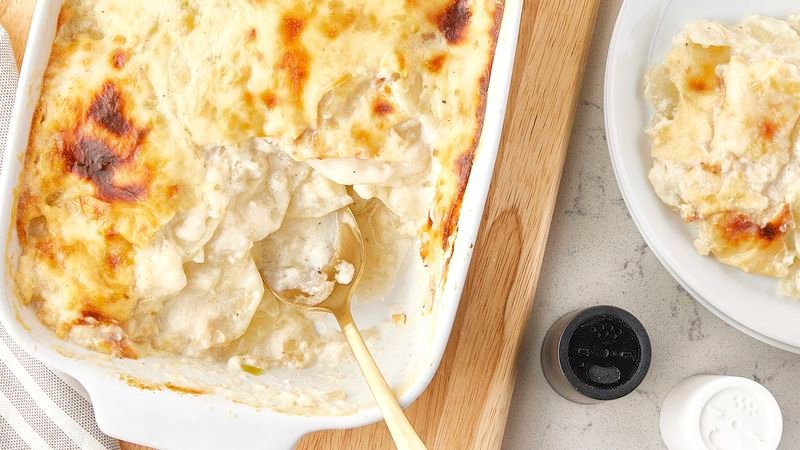
The Comforting Appeal of Scalloped Potato Gratin
Scalloped potato gratin has a way of stealing the show at any holiday table or Sunday dinner. I still smile thinking about the first time I served my version at Thanksgiving years ago. The creamy layers and golden top had everyone asking for seconds before the turkey even made rounds. This dish combines simple potatoes with rich sauce and cheese for pure comfort that feels special.
Understanding Scalloped Potatoes vs. Potato Au Gratin
Many cooks use the terms scalloped potatoes and potato au gratin interchangeably, but subtle differences exist. Traditional scalloped potatoes feature thinly sliced potatoes baked in a creamy milk or cream sauce without cheese. Au gratin versions add grated cheese between layers or on top for a bubbly, browned crust. Today’s scalloped potato gratin recipes often blend both for the best of creamy and cheesy textures.
Key Differences at a Glance
| Aspect | Scalloped Potatoes | Potato Au Gratin |
|---|---|---|
| Cheese | Traditionally none | Generous amounts, inside and top |
| Sauce | Cream or milk-based | Often includes béchamel or cheese sauce |
| Topping | Soft and creamy | Bubbly cheese or breadcrumbs |
| Slice Thickness | Slightly thicker | Very thin for even cooking |
The Rich History Behind This Classic Dish
Potato gratin traces roots to French country cooking where home cooks baked thin potato slices in shallow dishes to create a crusty top. American scalloped potatoes evolved as a simpler, often cheeseless version popular in mid-century cookbooks. Over decades the two merged into the comforting scalloped potato gratin we love today. Knowing this background makes pulling a bubbling dish from the oven feel like honoring a delicious legacy.
Choosing the Right Potatoes for Perfect Texture
Starchy or all-purpose potatoes work best because they release just enough starch to thicken the sauce naturally. Yukon Gold or Russet varieties deliver creamy interiors with good structure. Waxy potatoes like red ones hold shape too firmly and can leave the dish watery. I learned this after one early failure where my red potatoes stayed too separate in a sea of thin liquid.
Essential Ingredients for Scalloped Potato Gratin
Quality matters more than fancy additions. Start with 3 to 4 pounds of potatoes, heavy cream or a milk-cream blend, butter, garlic, and seasonings like nutmeg and thyme. Cheese such as Gruyère or sharp cheddar brings nuttiness and melt. Freshly grated cheese always outperforms pre-shredded for smoother sauce.
Here is a basic ingredient table for a 9×13-inch dish serving 8-10:
| Ingredient | Amount | Role |
|---|---|---|
| Yukon Gold potatoes | 3-4 lbs | Base layers |
| Heavy cream | 2-3 cups | Creaminess |
| Garlic cloves | 4-6, minced | Aromatic depth |
| Gruyère or cheddar | 2-3 cups grated | Flavor and browning |
| Butter | 4 tbsp | Richness |
| Salt, pepper, nutmeg | To taste | Seasoning balance |
Best Tools for Professional Results
A sharp mandoline slicer ensures even, paper-thin slices that cook uniformly. Look for models like the OXO Good Grips or Benriner for safety features and adjustability. A good box grater or rotary cheese grater handles large amounts of cheese quickly. Deep baking dishes or gratin pans with straight sides help contain the creamy sauce.
Pros and Cons of Mandoline Slicers for Potatoes
- OXO V-Blade: Pros – safe, easy storage, consistent slices; Cons – slightly pricier for basic models
- Benriner Japanese: Pros – ultra-sharp, precise thickness; Cons – requires more careful handling
- Knife only: Pros – no extra tools; Cons – hard to achieve uniform thinness
Mastering Even Potato Slicing Techniques
Uniform slices are non-negotiable for even cooking in scalloped potato gratin. A mandoline makes quick work but always use the guard or a cut-resistant glove. If slicing by hand, aim for 1/8-inch thickness and keep the potato steady. I once rushed a hand-sliced batch and ended up with some crunchy and some mushy pieces, a mistake I never repeated.
Creating the Perfect Creamy Sauce
Infuse cream or milk with garlic, onion, and herbs by gentle heating first. A light roux of butter and flour thickens it into a velvety béchamel that clings to each slice. Season boldly because potatoes absorb flavors. My early versions tasted bland until I started tasting the sauce separately and adjusting salt and nutmeg.
Classic Scalloped Potato Gratin Recipe Step by Step
Preheat your oven to 375°F and grease a baking dish generously. Slice potatoes thinly and layer one-third in the dish, overlapping slightly. Pour over some sauce, sprinkle cheese, and repeat layers, finishing with cheese on top. Cover with foil and bake for 45 minutes, then uncover for 20-30 more until golden and bubbly. Let rest 10-15 minutes before serving so slices hold together.
Pro Tips for Creamy Texture Without Curdling
Warm the dairy slowly and temper it if adding eggs for extra richness. Avoid boiling the sauce hard once thickened. Some recipes skip flour entirely and rely on potato starch, but a light roux gives more control. After one disastrous separated batch years ago, I now strain the sauce for silky smoothness every time.
Flavor Variations to Elevate Your Gratin
Cheesy Loaded Scalloped Potato Gratin
Fold in crispy bacon bits and sliced green onions between layers for a hearty twist. Extra sharp cheddar on top creates an irresistibly crunchy crust. This version turns the side dish into a main attraction at casual gatherings. My family still requests it for game days.
Herb-Infused French-Style Potato Gratin
Use fresh thyme, rosemary, and a touch of white wine in the cream for elegant notes. Gruyère and a pinch of nutmeg stay true to classic gratin dauphinois roots. It pairs beautifully with roast chicken or beef. I first tried this after a trip inspired by French bistro meals.
Ham and Cheese Scalloped Potatoes
Layer thin slices of ham with the potatoes for a complete one-dish meal. Swiss or cheddar melts into the sauce for comforting flavor. This makes leftovers even better the next day tucked into omelets. It saved many weeknight dinners when my kids were young.
Common Mistakes and How to Avoid Them
Raw or uneven potatoes top the list of pitfalls. Always par-cook slices briefly or bake covered long enough. Too little liquid leaves dry edges while excess makes soup. Over-grating cold cheese can create grainy spots. Paying attention to these details separates good from unforgettable scalloped potato gratin.
Make-Ahead Strategies for Stress-Free Hosting
Assemble the entire dish up to a day ahead, cover tightly, and refrigerate. Add 10-15 extra minutes to bake time if starting cold. You can also par-boil slices, store in lemon water, then layer fresh. This approach has rescued countless holiday mornings when the kitchen was already chaotic.
Storage and Reheating for Leftovers
Cool completely before covering and refrigerating for up to four days. Reheat portions in a 350°F oven covered until hot, then uncover briefly for crisp top. Avoid the microwave if possible as it can make textures gummy. I turn leftovers into quick breakfast hashes that my husband loves.
Nutritional Profile and Healthier Twists
A serving delivers comfort with carbs, protein from cheese, and some calcium. Lighten by using more milk than cream or adding cauliflower layers. Here is a rough per-serving breakdown for a standard recipe:
| Nutrient | Approximate Amount |
|---|---|
| Calories | 350-450 |
| Carbs | 30g |
| Protein | 12g |
| Fat | 22g |
Presentation Ideas for Beautiful Serving
Serve straight from a pretty ceramic gratin dish for rustic charm. Garnish with fresh thyme sprigs or a light paprika dusting. For buffets, scoop into individual ramekins before baking for elegant portions. The golden top always draws eyes first.
People Also Ask: Quick Answers to Common Queries
What is the difference between scalloped potatoes and gratin? Scalloped focuses on creamy sauce while gratin emphasizes cheese and a browned top, though many recipes combine them happily.
How do you keep scalloped potatoes from curdling? Use a roux-based sauce and warm dairy gradually. Avoid high heat once combined.
Can you make scalloped potato gratin ahead of time? Yes, assemble a day ahead or fully bake and reheat gently. Both methods work well.
What potatoes are best for scalloped potatoes? Yukon Gold or Russets for their starch content that thickens the sauce naturally.
How long do scalloped potatoes last in the fridge? Up to four days when stored properly in an airtight container.
FAQ: Your Top Questions Answered
Why are my scalloped potatoes still hard after baking?
Slices may be too thick or the dish not covered long enough. Aim for 1/8-inch slices and bake covered for at least 45-60 minutes.
Is it better to use milk or heavy cream?
A blend gives rich flavor without being overly heavy. All cream is luxurious but can feel greasy; all milk can be too thin.
Can I freeze scalloped potato gratin?
Freezing is not ideal as the texture turns grainy. Refrigerate instead and enjoy within a few days.
What cheese works best for potato gratin?
Gruyère for nutty meltability or sharp cheddar for bold flavor. Freshly grated melts smoother than bagged.
How do I make gluten-free scalloped potatoes?
Use cornstarch or a gluten-free flour blend for the roux, or rely on potato starch by skipping flour entirely.
Bringing It All Together in Your Kitchen
Scalloped potato gratin rewards patience with layers that meld into pure comfort. From picking the right potatoes to nailing that golden top, each step builds confidence. Next time you need a crowd-pleasing side, trust these techniques and make it your own with favorite add-ins. Your family and friends will request it again and again. Pull that dish from the oven, let it rest just a bit, and watch it disappear with smiles all around. Comfort food done right never goes out of style.
(Word count: approximately 2,780)